

26 may 2026
Axle load control is essential for every carrier operating trucks, grain transport vehicles, dump trucks, or semi-trailers. Improper weight distribution can result in fines, accelerated vehicle wear, and road surface damage.
That is why it is important to understand how axle load is determined, what regulations apply in Ukraine, and which equipment helps control vehicles before departure.
Axle load is the portion of a vehicle’s total weight transferred to the road surface through a single axle or axle group. In simple terms, it is the pressure that vehicle wheels apply to the road.
Cargo weight is never distributed perfectly evenly. In most cases, rear axles carry more load than front axles. That is why even vehicles within the permitted total weight may exceed limits on individual axles.
Road control of this parameter is carried out using weight and dimension control systems and WIM (Weigh-In-Motion) complexes. Their purpose is to prevent road damage and improve traffic safety.
Ukraine has clearly established axle load limits for heavy vehicles. These regulations are governed by traffic laws and weight control standards.
Below is a standard axle load limit table for freight transport:
| Axle Type | Permitted Value |
| Single axle | up to 11 t |
| Tandem axle | up to 16 t |
| Triple axle | up to 22 t |
Axles are considered tandem or triple when the distance between them does not exceed 2.5 meters. If the distance is greater, each axle may be treated separately during inspection.
Different standards may apply to container carriers and certain categories of special vehicles. For example, container trucks may be allowed higher tandem or triple axle loads on approved routes. Local road restrictions must also be considered. Many routes impose stricter limits on total vehicle weight and axle load, especially during hot weather or seasonal restrictions.
In practice, axle load tables are used by carriers before vehicles leave for transport operations. This is especially important for vehicles carrying bulk or unevenly distributed cargo.
Today, axle load limits in Ukraine are monitored using stationary weighing stations, mobile weighing systems, and automatic WIM systems. These systems determine vehicle weight while moving, identify license plates, and automatically generate information about potential violations.
The calculation depends on several factors:
The basic formula is:
M = H_1 + H_2 + \dots + H_n
where:
It is important to understand that simply dividing total weight by the number of axles does not provide accurate results. If the cargo is shifted forward or backward, one axle may become critically overloaded.
Calculation Example
Suppose a road train consists of:
In this case, part of the weight is transferred to the tractor while most of it is distributed to the trailer. If the cargo is unevenly loaded, the rear axle group may exceed the limit even when the total weight remains within legal limits.
For quick verification, carriers often use axle load calculators or specialized weighing systems.
Modern weighing systems allow businesses to control vehicles before departure and minimize the risk of overloading.
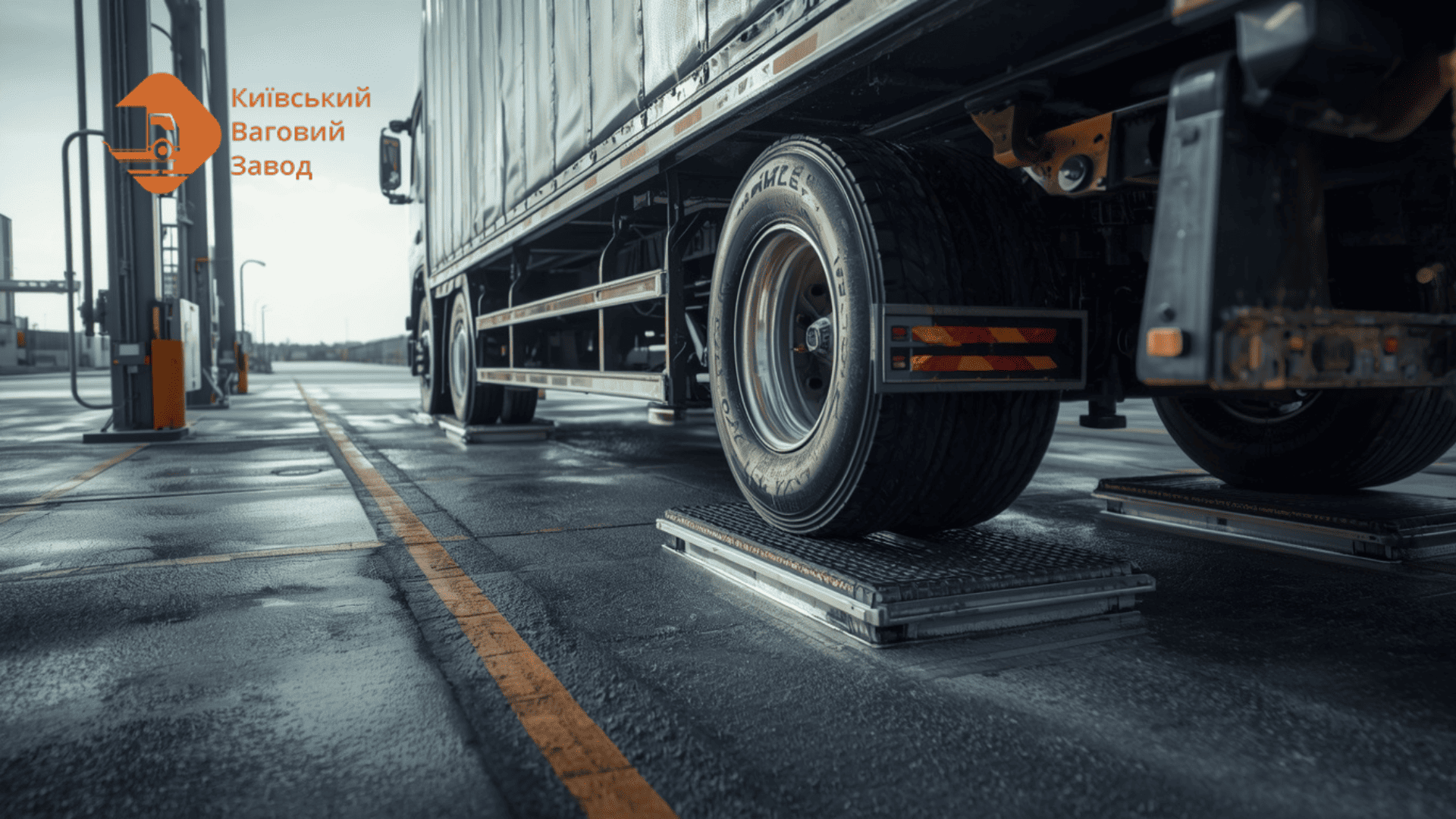
Axle scales determine the load on each axle separately. The vehicle drives onto the platform axle by axle, after which the system transfers the data to the weighing indicator.
Advantages of this solution:
For companies with their own vehicle fleets, weighing systems from Kyiv Weighing Factory may be an effective solution. The company manufactures truck and axle scales and provides installation, setup, and calibration services.
Dynamic weighing allows vehicle parameters to be measured without a complete stop. Vehicles move through the weighing platform at low speed while sensors automatically record measurements.
Such systems are widely used on roads and logistics facilities with heavy traffic flow.
This type of equipment combines the high accuracy of static scales with the speed of dynamic weighing systems.
Advantages:
These solutions are especially popular at grain elevators, quarries, warehouses, and manufacturing facilities.
Axle load control is necessary not only to avoid fines. Proper weight distribution affects road safety, vehicle lifespan, transportation repair costs, and the condition of road infrastructure.
Overloaded vehicles are harder to control, have longer braking distances, and create additional stress on suspension systems, frames, and tires. Excessive loads increase the risk of:
Uneven axle load distribution also affects vehicle behavior during turns and emergency braking.
Overloaded axles are one of the main causes of asphalt destruction, rut formation, and bridge damage. Even minor overloads significantly increase stress on road structures. During hot weather periods, road surfaces become even more vulnerable. High temperatures reduce asphalt rigidity, and overloaded vehicles damage the pavement much faster.
Weight and dimension control in Ukraine is carried out through stationary and mobile checkpoints as well as automatic WIM systems. These systems determine:
If the measured values exceed established limits, carriers receive fines according to the severity of the violation.
Overload fines can amount to tens of thousands of hryvnias. However, financial losses are not limited to penalties alone.
Carriers also risk:
That is why regular weighing has become a standard practice for modern transportation and logistics companies.
For companies that regularly operate heavy vehicles, axle load control should be part of the daily logistics process.
The most accurate method is the use of axle scales or truck scales. Enterprises with heavy traffic flow often install stationary weighing systems, while mobile portable scales are used for temporary or field inspections.
Automated weighing systems significantly simplify vehicle control and minimize the impact of human factors.
Modern systems can:
At large enterprises, automation helps accelerate logistics operations and reduce queues at weighing stations.
Even when scales are available, it is important to organize proper control procedures:
The best results are achieved through a comprehensive control approach combining several solutions and systems:
It is also important to check axle load during the loading process rather than immediately before departure.
Axle load control is an important part of transportation safety and efficient logistics. Modern weighing systems help prevent overloads, fines, and premature vehicle wear.
For businesses that regularly work with freight transport, axle load tables and high-quality weighing equipment become essential tools for daily operations. Reliable solutions from Ukrainian manufacturers, including Kyiv Weighing Factory, make it possible to automate control processes and ensure accurate vehicle weighing under any operating conditions.
It is the portion of a vehicle’s total weight transferred to the road surface through a single axle or a group of axles.
The most accurate method is the use of axle scales or truck scales. Automatic WIM systems and onboard monitoring systems may also be used.
Overloading reduces road safety, accelerates vehicle wear, damages road surfaces, and may result in significant fines for carriers.
