

19 june 2026
Freight transport requires constant weight control, since overloading leads to fines, accelerated equipment wear, and additional costs. Modern weighing systems help avoid these problems and optimize transportation costs. That’s why demand for affordable rapid weighing and load control systems is growing in logistics, agriculture, and the mining industry. But to choose the right weighing system, it’s important to understand its purpose and the specifics of its use.
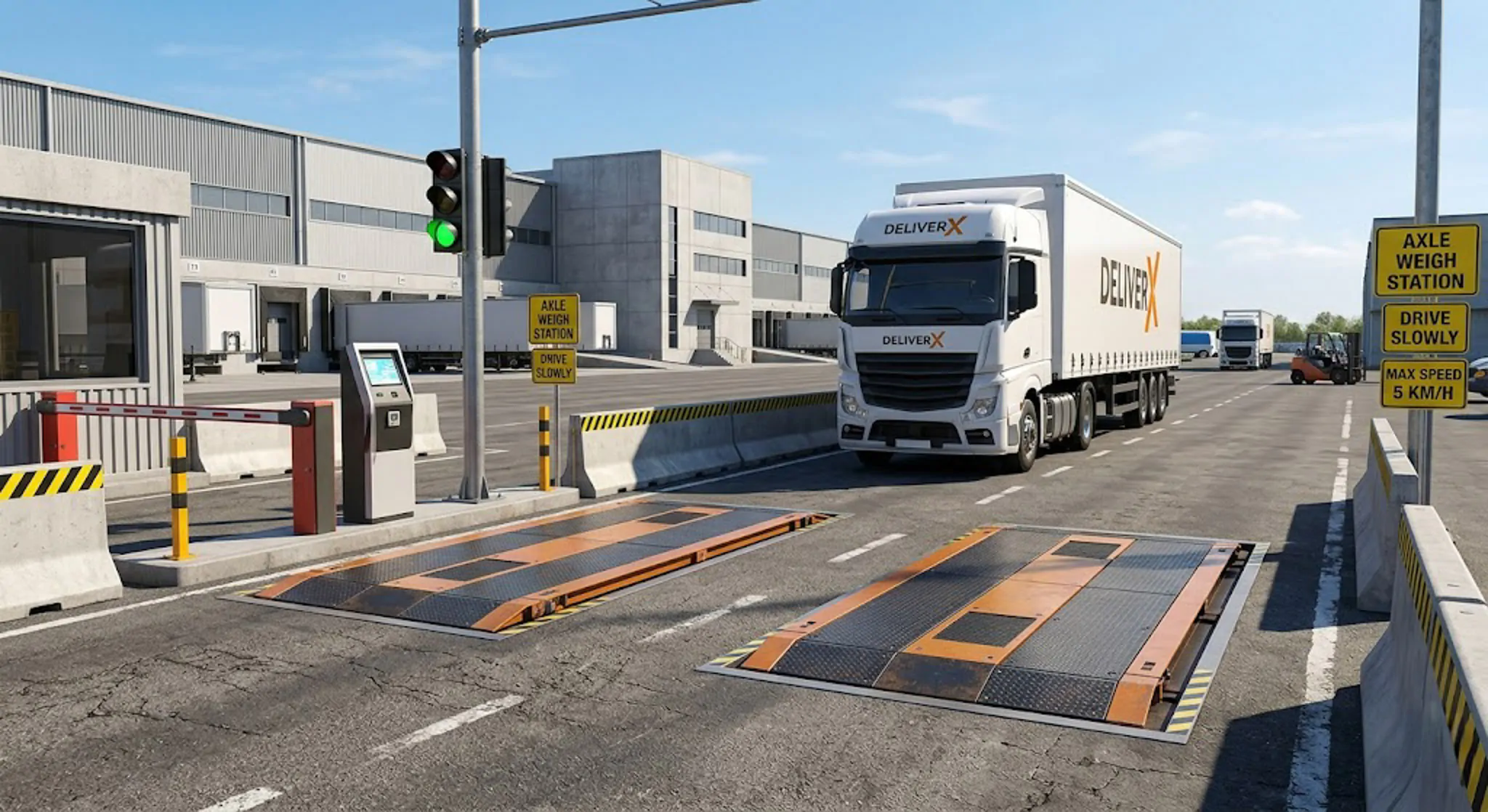
Axle scales are equipment designed to measure the load on each individual vehicle axle in sequence. After measuring all the axles, the obtained values are added together, allowing the vehicle’s total mass to be determined.
The main purpose of this equipment is to control axle load. This is especially important for carriers, agricultural enterprises, quarries, and construction companies.
Such solutions are used in cases when it is necessary to:
Regular weight monitoring helps companies save on fleet maintenance and significantly reduces the likelihood of accidents.
To understand the benefits of this equipment, it’s worth looking at how the measurement process works.
The operating principle of axle scales is based on sequentially weighing each axle of the vehicle. The wheels drive onto the platform one at a time, and load cells register the load. After all the axles have passed, the system adds up the obtained values and determines the vehicle’s total mass.
Weighing can be carried out in two ways:
The accuracy of the results is affected by:
That’s why it’s important to use certified equipment and have it installed professionally.
The market offers several types of systems that differ in their operating method and field of application.
These models provide high measurement accuracy. During weighing, the vehicle stops, and each axle is sequentially positioned on the platform. This type of equipment is used in agriculture, manufacturing, logistics centers, and at enterprises where precise mass control is important.
WIM systems allow load to be determined while the vehicle is moving. The main advantage of such systems is their ability to efficiently handle high traffic volumes. These solutions are often used at enterprises with intensive vehicle traffic, as well as for the prompt control of trucks.
Mobile models are used where a temporary checkpoint needs to be set up quickly.
The main advantages of these systems are:
They are widely used in quarries, construction sites, field roads, and other locations where stationary equipment is not needed.
The choice of this type of system is often driven by economic feasibility. Compared to stationary platforms, the cost of this equipment is significantly lower. Another advantage is that installation doesn’t require complex and costly foundation work.
Key advantages include:
For many businesses, such solutions prove optimal when traffic flow is irregular.
Along with the advantages, there are also certain limitations. Dynamic weighing typically has a larger margin of error than static weighing. Strict adherence to weighing procedures also directly affects the accuracy of the results.
Main disadvantages include:
That’s why other solutions are often used for continuous, high-intensity operations.
For an objective comparison, it’s worth examining how full-size systems work.
Truck scales allow a vehicle to be weighed completely in a single cycle. In this case, the truck drives onto the platform, and the system determines the total mass without separately measuring the load on each axle.
Such systems are widely used:
For commercial transactions, full-size equipment traditionally remains the primary and most in-demand solution.
Both options have their own advantages and are designed for different tasks.
| Parameter | Axle Systems | Truck Scale Systems |
| Accuracy | Medium to high | Maximum |
| Cost | Lower | Higher |
| Installation | Simple | Requires foundation preparation |
| Operating Speed | Sequential weighing | Full weighing in one cycle |
| Mobility | High | Stationary installation |
| Field of Application | Load control | Commercial accounting |
In some cases, such solutions bring the greatest financial benefit to a business.
They are a good fit if:
Such solutions are often chosen by farms, quarries, and small transport companies.
There are also situations where it’s better to opt for large, full-size systems.
They are recommended if:
Such systems form the backbone of almost every modern weighing station’s infrastructure. Kyiv Weighing Plant designs and manufactures truck scale systems tailored to specific operating conditions. Thanks to its own production facility, in-house engineering team, and comprehensive approach, the company provides full turnkey support, including the design and commissioning stages.
Before purchasing, it’s important to determine the business’s actual needs.
Pay attention to:
For continuous system operation, it’s important to anticipate the likely growth in load and traffic in advance.
KVZ specialists help select the optimal solution while taking into account the specifics of each individual business. Thanks to its own production, the company ensures quality control, service support, and comprehensive project assistance.
The choice of weighing system depends on the nature of the business’s operations, vehicle volume, and accuracy requirements.
For temporary sites, small transportation volumes, and overload control, such solutions can significantly cut costs. However, if precise commercial accounting and continuous operation are required, it’s more practical to use stationary truck scale systems.
To choose the optimal equipment for your business, it’s worth consulting with KVZ specialists. This will help you get a solution that ensures accurate weight control and efficient use of your investment.
“`
