

19 june 2026
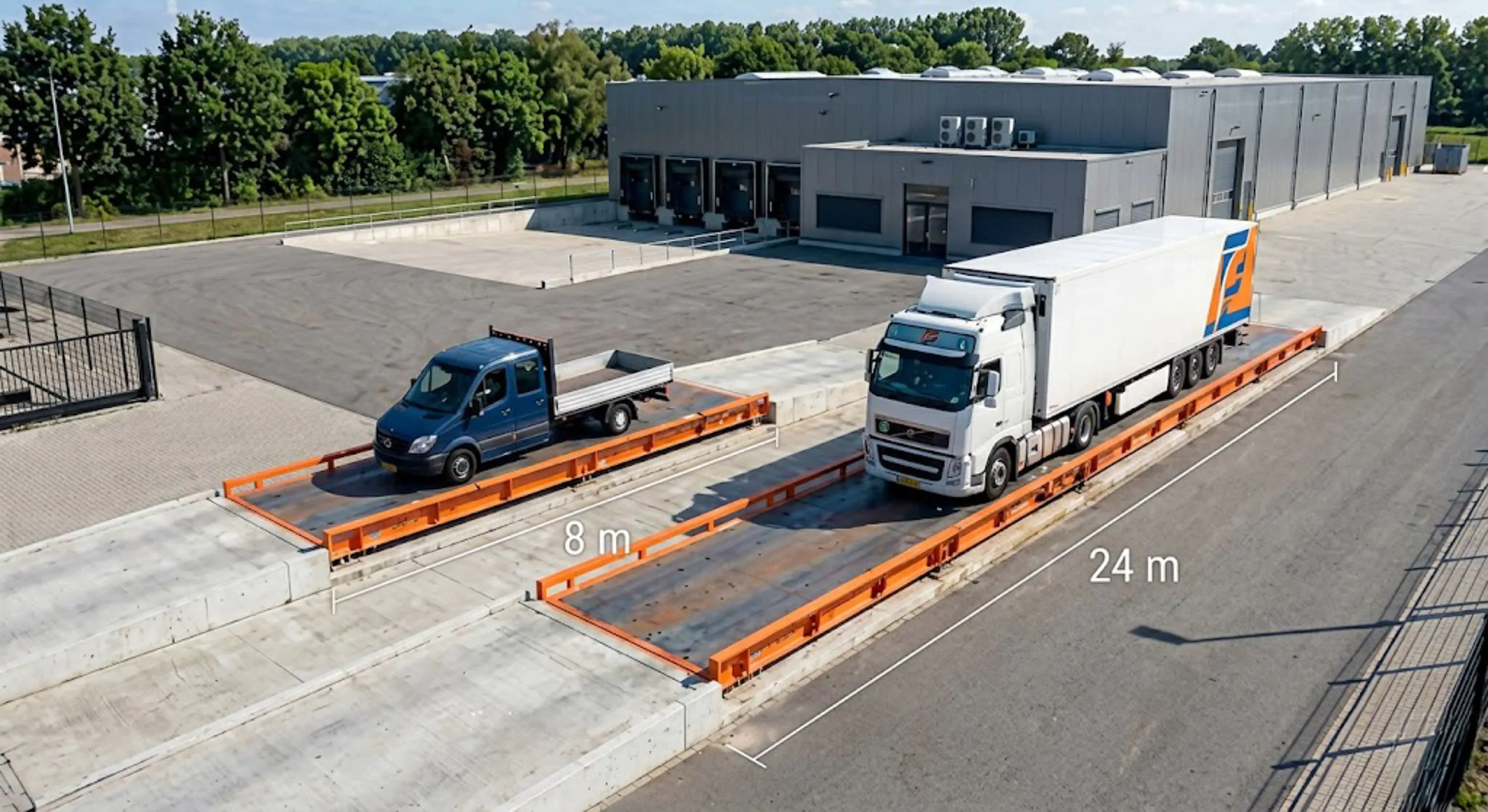
When choosing a weighing system, many businesses face the question – how long should the platform be? This parameter affects not only the cost of the equipment, but also ease of use, vehicle processing speed, and measurement accuracy. An incorrectly chosen platform can create additional costs and complicate the business’s operations. Truck scales that are too short can limit the types of vehicles that can be weighed, while excessively long ones aren’t always economically justified. That’s why it’s worth understanding in advance how 8, 16, 18, and 24-meter solutions differ.
A correctly chosen platform helps avoid unnecessary operations, speeds up the process, and ensures comfortable weighing. Its size also determines the versatility of the weighing system. If a business currently works with only certain types of trucks, its fleet or client requirements may change in a few years. That’s why it’s important to account for both current and future business needs from the start.
Measurement accuracy largely depends on whether the vehicle fits on the platform entirely. In most cases, it’s the full placement of the vehicle on the platform that produces the most accurate result. This is especially important for commercial accounting, where every ton affects product cost, supplier settlements, or shipment control.
In theory, a truck can be weighed in sections. However, this method takes more time and increases the influence of human error. In addition, multiple drive-ons to the platform create extra workload for staff and can cause queues during peak periods.
Another important factor is throughput. The faster a vehicle passes through the weighing procedure, the fewer downtimes occur at the business. For grain elevators, logistics centers, quarries, and manufacturing facilities with high vehicle traffic, even a few extra minutes per weighing can add up to significant time losses over a season or a year.
Different platforms are designed for different types of vehicles and scales of operation.
These truck scales are typically installed by businesses working with small trucks, short-wheelbase dump trucks, trailers, and various specialized vehicles. They are suitable for farms, recycling collection points, construction companies, and small manufacturing facilities.
The main advantages are compactness, affordable cost, and lower expenses for site preparation and installation. In addition, installing this type of scale doesn’t require a large area, which is important for businesses with limited space.
At the same time, an 8-meter platform has certain limitations. It isn’t designed for most modern semi-trucks and road trains, so if transport volumes increase or the fleet changes, upgrading the weighing system may become necessary.
A 16-meter platform is considered one of the most common solutions for Ukrainian businesses. This option is often chosen by manufacturing companies, warehouses, agricultural enterprises, and construction businesses.
These truck scales are suitable for most common trucks, dump trucks, and semi-trailers. They offer sufficient versatility and allow working with various vehicle types without major restrictions.
The advantage of the 16-meter platform is its optimal balance of cost and functionality. In many cases, this option provides the required weighing accuracy without unnecessary expenses, which is why it’s often referred to as a compromise between compact and long models.
An 18-meter platform is considered a versatile solution for most modern freight transport. It allows for comfortable weighing of Euro semi-trucks, grain trucks, tractor-trailers, and other heavy-tonnage vehicles.
These truck scales are widely used at grain elevators, logistics complexes, grain storage facilities, wholesale warehouses, and industrial enterprises. This size is often recommended for companies planning to increase their cargo flow in the future.
Compared to 16-meter models, an 18-meter platform offers greater convenience for drivers and operators, as well as extra margin in case the type of vehicle changes. This gives the business a more versatile, long-term solution.
A 24-meter platform is designed for working with extra-long vehicles and large transport volumes. It allows road trains, container trucks, large grain trucks, and specialized equipment to be weighed without difficulty.
These truck scales are most often installed by large grain elevators, quarries, ports, metallurgical plants, and logistics centers with heavy vehicle traffic. With a high vehicle flow, a long platform helps minimize delays and speed up cargo processing.
The main advantage is maximum operational convenience and high throughput. Although these solutions cost more, for large businesses the investment quickly pays off through reduced downtime, lower risk of errors, and comfortable operation with any type of freight vehicle.
The size of the platform affects not only the convenience of weighing, but also the efficiency of the entire business.
A correctly chosen length reduces vehicle processing time, prevents queues, and ensures stable cargo accounting even during periods of peak load. The faster vehicles pass through the weighing procedure, the higher the business’s throughput. This is especially important for grain elevators, logistics centers, and production sites, since delays during receiving or shipping can lead to downtime and lost profit.
A wrongly chosen platform also increases the risk of errors. If a vehicle doesn’t fit on the weighing platform or the operator has to perform several consecutive weighings, the influence of human error grows. In commercial operations, this can lead to inaccurate accounting, disputes with business partners, and even fines for vehicle overloading.
Another important aspect is staffing costs. An automated, fast weighing process reduces operator working time, speeds up document processing, and lowers the workload on employees. With high vehicle traffic, this directly affects the productivity of the entire business.
Although longer platforms require a higher initial investment, in many cases they pay off quickly. Accurate accounting, the absence of unnecessary operations, reduced downtime, and the ability to work with various vehicle types help avoid additional costs in the future and ensure stable business operations for many years to come.
Short platforms are a practical solution for businesses that don’t work with oversized road trains and don’t have very heavy vehicle traffic. In many cases, they provide the required weighing accuracy without unnecessary expenses on purchasing and installing equipment.
These scales are often chosen by farms, small manufacturing facilities, construction companies, raw material receiving points, and warehouses with moderate loads. If the main vehicles are dump trucks, light-duty trucks, or standard semi-trailers, 8–16-meter platforms usually fully meet the business’s needs.
Another advantage is lower upfront costs. More compact structures require less installation space and reduce expenses on site preparation and installation work. This is especially relevant for businesses with a limited budget or a shortage of available space.
Short platforms also make sense when weighing is performed irregularly or the number of vehicles per day is relatively low. In such cases, there’s no need to overpay for excess capacity that the business won’t actually use.
Platforms 18–24 meters long are worth installing for businesses that regularly work with semi-trucks, grain trucks, container trucks, and other oversized vehicles. These solutions provide comfortable weighing without extra maneuvering and help speed up cargo processing.
Long scales are especially relevant for commercial operations involving buying and selling goods. Accurate weight accounting helps avoid disputes with suppliers and customers, as well as minimize the risk of errors when processing documents.
Another advantage is a margin for future growth. If a company plans to increase transport volumes or expand its fleet, a longer platform will help avoid the need to upgrade the weighing system a few years after installation.
Although the initial investment in such solutions is higher, in the long run they often turn out to be more cost-effective. High throughput, versatility, and the ability to work with any type of freight vehicle ensure stable, efficient operation of the business for many years ahead.
Below is a comparison of key parameters for platforms of different lengths, which will help you assess their convenience, cost, and optimal field of application for efficient business operation.
| Length | Vehicle Type | Accuracy | Convenience | Cost | Field of Use |
| 8 m | Small trucks, specialized vehicles | High | Medium | Low | Small businesses |
| 16 m | Trucks, semi-trailers | High | High | Medium | Manufacturing, warehouses |
| 18 m | Euro semi-trucks, grain trucks | High | Very high | Medium | Grain elevators, logistics |
| 24 m | Road trains, container trucks | High | Maximum | Higher | Quarries, large facilities |
One of the most common mistakes is excessive cost-cutting at the initial stage. In an effort to reduce expenses, businesses sometimes install shorter platforms than necessary. As a result, when transport volumes increase or the business switches to larger vehicles, an upgrade or even a complete replacement of the weighing system becomes necessary, leading to much higher costs down the road.
Another common problem is incorrectly determining the type of vehicles that will be used. When choosing, it’s important to consider not only the current fleet but also business growth prospects. If a business plans to work with semi-trucks, grain trucks, or road trains, extra platform length will help avoid restrictions during future operation.
Business owners also often underestimate cargo flow intensity, which leads to queues and downtime. That’s why, when making a choice, it’s important to assess not only current needs but also the possible growth in work volume over the coming years.
To avoid these mistakes, it’s a good idea to answer a few questions before placing an order:
That’s why many companies turn to specialists at the Kyiv Weighing Plant. Thanks to its own production, project experience, and the ability to manufacture solutions tailored to specific tasks, the company helps select the optimal weighing system configuration.
There’s no universal solution equally well-suited to every business. The choice of platform length always depends on the type of vehicles, operational intensity, and business growth plans. That’s why it’s important to assess not only current needs but also how the business will change in the coming years.
8-meter platforms are a good choice for small trucks and limited budgets. 16-meter models can be called the optimal option for most medium-sized businesses. 18-meter scales are considered one of the most versatile solutions for working with modern semi-trucks and grain trucks, while 24-meter platforms are worth installing at large logistics, industrial, and agricultural facilities with heavy vehicle traffic.
The main rule is that the weighing system must meet not only today’s tasks but also the company’s future needs. If you have any doubts about your choice, KVZ specialists will help assess vehicle characteristics and load intensity, and select a solution that will operate efficiently for many years without unnecessary upgrade costs.
“`
