

26 may 2026
Weighing equipment is widely used in logistics, agriculture, industry, and transportation enterprises. Errors during weighing can lead to overweight fines, product losses, or inaccurate accounting, which is why selecting the right weighing system directly impacts business efficiency. Modern weighing systems help automate logistics, monitor raw materials in production, and maintain accurate inventory records. That is why companies seek solutions that ensure precise product accounting and load control.
Weighing equipment is a set of technical systems designed to determine the weight of cargo, vehicles, or products. Modern scales operate using load cells that convert mechanical force into a digital signal. After processing, the data is displayed on a terminal and can also be integrated into enterprise management systems.
Today, weighing systems are used for:
For businesses, it is essential that weighing equipment operates reliably even in harsh environments. That is why modern systems are protected against moisture, dust, and temperature fluctuations.
Modern scales differ in design, installation method, operating principle, and area of application. Choosing the right system depends on the type of cargo, business workload, and required weighing accuracy. Logistics centers prioritize fast vehicle processing, manufacturers require stable measurements, while agricultural businesses need reliable equipment capable of operating in difficult conditions.
Modern scales may differ in platform construction and sensor installation methods.
Axle weighing systems operate by measuring the load on each axle separately. The vehicle passes through individual weighing sections, after which the system calculates the total vehicle weight. These solutions have lower installation costs and are well suited for intensive traffic flow.
Different types of scales have specific installation features depending on site conditions and operational requirements.
When considering scale types and construction, it is important to evaluate both the design features and intended application.
Today, scales are also classified according to their measurement technology.
Certain types of scales are designed specifically for particular industries and operational tasks.
Choosing weighing equipment depends not only on the company’s budget but also on operational specifics, cargo type, and load intensity. An incorrectly selected system can lead to measurement errors, transport downtime, and additional repair or modernization costs. That is why businesses should carefully analyze their operational needs and equipment conditions before purchasing.
Compact platform scales may be suitable for small warehouses, while logistics centers, grain elevators, and industrial enterprises typically require truck or rail scales with high throughput capacity. It is also important to consider future business growth so the equipment can handle increasing workloads.
Main Selection Criteria:
First, it is necessary to determine what exactly will be weighed: bulk materials, finished products, pallets, vehicles, or railcars. Hopper scales are commonly used for grain and feed, platform or truck scales for logistics, and rail weighing systems for railway operations.
The equipment’s load capacity should include a safety margin. If the system constantly operates at its limit, this will accelerate wear of the structure and sensors. For heavy-duty vehicles, scales with a weighing capacity of 40 to 80 tons are typically used.
Minimal measurement error is critical for commercial accounting. High accuracy is provided by modern electronic and load cell weighing systems. These systems automatically record weighing results and minimize the impact of human error.
When selecting weighing equipment, it is important to consider the condition of the site, traffic intensity, humidity levels, dust exposure, and temperature fluctuations. For outdoor applications, it is recommended to use equipment with corrosion and moisture protection.
It is also important to consider the installation type. Foundation-based systems provide high stability and long service life, while foundationless solutions allow faster installation and reduced construction costs.
Modern weighing systems can integrate with ERP, CRM, and accounting software. This makes it possible to automate product accounting, generate reports, and remotely monitor logistics processes in real time.
For businesses with heavy traffic flow, features such as automatic license plate recognition, remote monitoring, and centralized data transfer are especially important.
Special attention should be paid to the manufacturer. A reliable company should not only produce the equipment but also provide installation, configuration, maintenance, and official calibration services. Kyiv Weighing Factory delivers turnkey projects, allowing businesses to receive a ready-to-use solution without involving additional contractors or facing launch delays.
Modern weighing systems have become an essential part of logistics, manufacturing, agriculture, and transportation infrastructure. They not only determine cargo weight but also automate accounting, monitor product movement, and minimize financial losses for businesses.
Unlike outdated mechanical solutions, modern electronic systems operate faster, more accurately, and can integrate with company software. This is especially important for businesses with heavy vehicle traffic or large product volumes.
Main Advantages:
An additional advantage is remote monitoring capability. Managers or operators can access weighing data via computer or smartphone, even when outside the facility.
Modern electronic scales help automate accounting, improve logistics control, and increase business efficiency. Reliable weighing systems reduce weighing errors and provide stable product monitoring.
The right choice of scales depends on business needs and operating conditions. For some companies, maximum accuracy is the priority, while for others, faster vehicle processing or process automation is more important.
Kyiv Weighing Factory provides solutions for businesses of all sizes — from farms to large industrial enterprises. KVZ uses high-quality components, modern load cells, and multi-level production quality control. As a result, the equipment is designed for long-term operation even under intensive workloads. In-house manufacturing, an engineering department, and a full-cycle production process allow Kyiv Weighing Factory to maintain quality control at every stage.
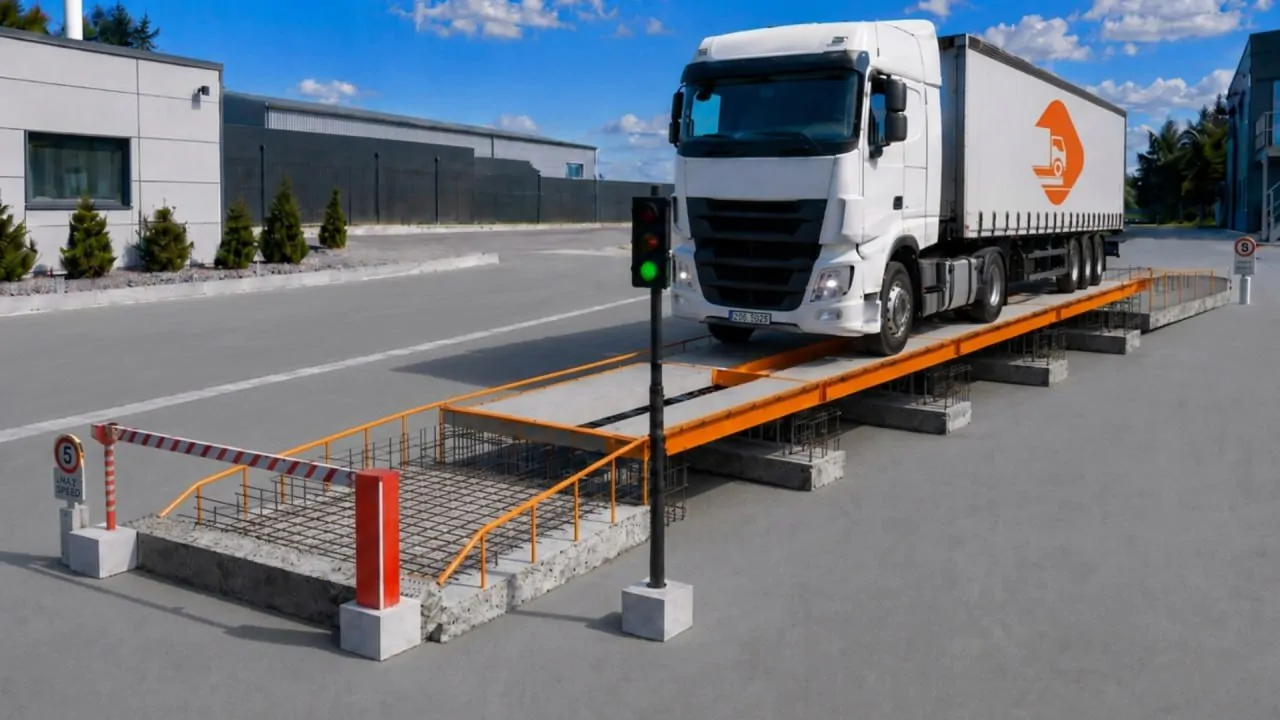
Truck weighing is most commonly performed using platform truck scales or axle weighing systems. These solutions allow businesses to control the total vehicle weight as well as the load on individual axles.
Axle scales are weighing systems designed to measure the load on each axle of a vehicle. These solutions help prevent overloading and ensure proper cargo weight distribution.
Rail weighing systems are used in railway logistics, industrial enterprises, grain elevators, and transshipment facilities. These systems provide accurate railcar weight control and automated accounting processes.
