

23 july 2026
The accuracy of truck scales directly affects cargo accounting, logistics, and the financial performance of an enterprise. Even a minor error can lead to discrepancies during shipment, mistakes in documentation, or problems with passing metrological verification. This is why setting up truck scales involves a comprehensive range of technical procedures rather than simply changing parameters in the weighing terminal.
Setting up truck scales is a set of technical procedures that ensure the correct operation of the weighing equipment and its compliance with metrological specifications. It includes adjustment of the load cell system, configuration of the weighing terminal parameters, calibration, and preparation of the equipment for verification. Each procedure serves a specific purpose and is carried out in a defined sequence.
For enterprises that use scales for commercial accounting, it is important to perform all procedures in accordance with the manufacturer’s requirements. KVZ provides a complete cycle of commissioning services — from initial setup to preparing the equipment for official verification.
During operation, weighing equipment is exposed to heavy loads, temperature fluctuations, moisture, dust, and natural wear of components. Over time, these factors can cause measurement errors even in modern electronic systems.
The most common causes of inaccuracies include faulty load cells, foundation subsidence, platform deformation, damaged cables, or contamination around load cell mounting assemblies.
KVZ specialists recommend paying attention to the following signs:
repeated weighing of the same vehicle produces different results;
readings change depending on the vehicle’s position on the platform;
the scales return slowly to zero;
deviations appear after repairs or component replacement;
the equipment fails to pass metrological verification.
These signs indicate that the scales require adjustment, and the sooner the cause of the inaccuracy is identified, the lower the cost of correcting it will be.
Before adjustment and calibration, the technical condition of the entire system must be checked. First, the platform, foundation, load cells, cable lines, grounding, and weighing terminal are inspected, and the scales are cleaned of dirt and foreign objects.
Only after mechanical faults have been eliminated and electronic components have been checked should the setup process begin. A comprehensive approach is what makes it possible to achieve stable measurement accuracy. During maintenance, KVZ specialists inspect not only the electronics but also all structural elements of the weighing system, helping to prevent measurement errors from recurring.
Adjustment is performed to ensure that the scales determine the vehicle’s weight with the same accuracy regardless of where exactly it is positioned on the platform. If the system is not adjusted correctly, the results may differ even when the same vehicle is weighed repeatedly.
During adjustment, specialists check the operation of all load cells and synchronize their interaction. This makes it possible to eliminate uneven load distribution between the supports and ensure stable readings along the entire length of the load-receiving platform. The accuracy of the entire weighing system during subsequent operation largely depends on the quality of this stage.
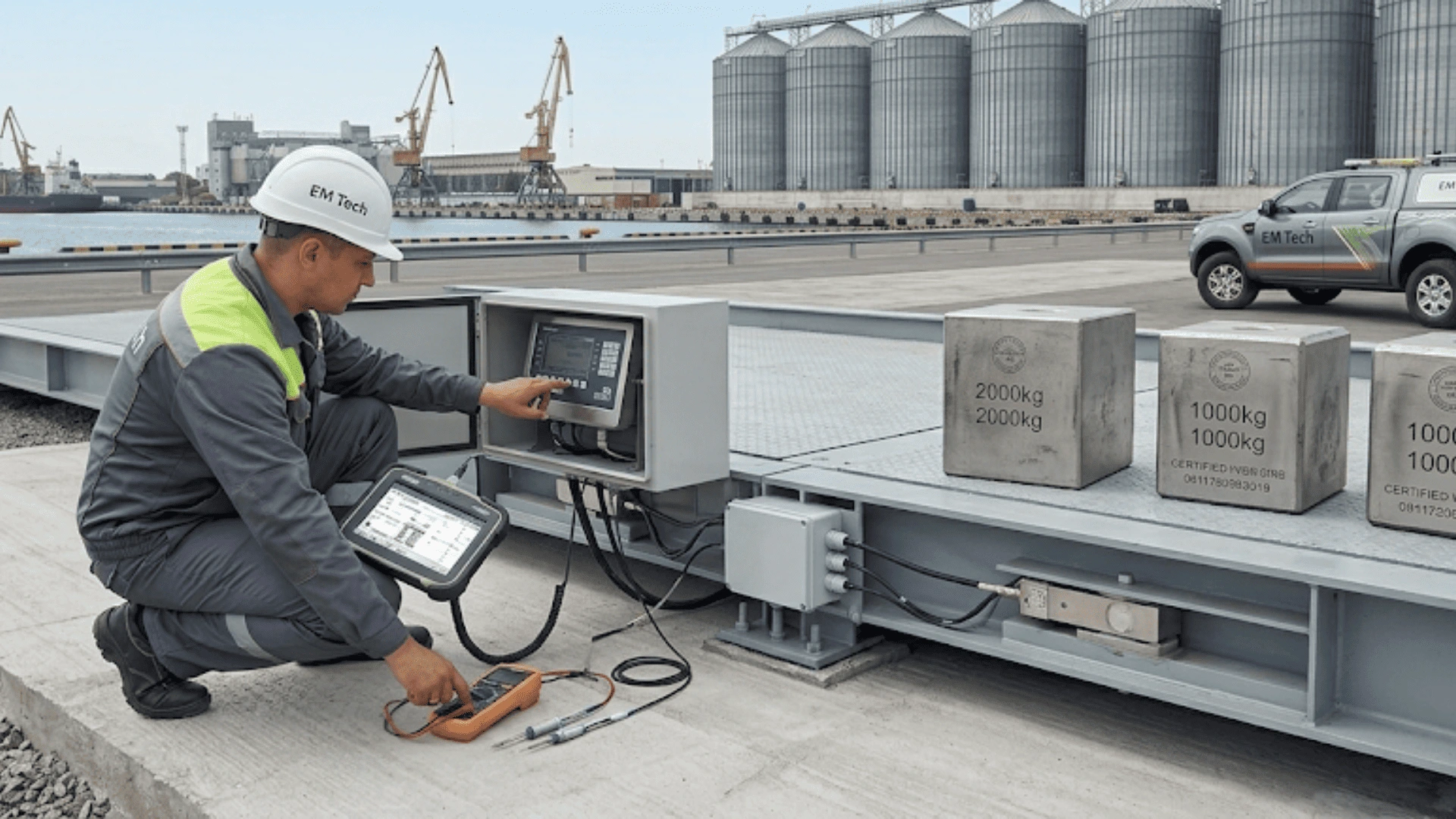
After adjustment, calibration is performed, during which the scales are configured to operate with a reference load. The purpose of this procedure is to ensure that the actual weight of the load corresponds to the readings displayed by the weighing terminal.
Certified reference measuring instruments or other methods specified by the manufacturer and regulatory documents are used for calibration. After the necessary adjustments have been made, a test weighing is carried out to ensure that the system operates consistently throughout the entire load range. If the equipment is used for commercial accounting, the next step is metrological verification.
Setting up truck scales is not limited to calibration alone. Correct configuration of the weighing terminal, which receives signals from the load cells, processes them, and displays the weighing result, also plays an important role.
When the equipment is commissioned, specialists configure the weighing capacity, display division, signal filtering modes, automatic zeroing parameters, and data exchange settings for integration with the enterprise’s accounting systems. Correct configuration of these parameters helps reduce the impact of external factors and ensures stable scale operation even under intensive use.
These three terms are often used interchangeably, although they refer to different procedures. Adjustment balances the readings of all load cells, calibration establishes the correct relationship between the applied load and the readings of the weighing terminal, while verification officially confirms that the scales comply with the requirements of current legislation.
In other words, adjustment and calibration are technical procedures used to configure the equipment, while verification is performed by authorized metrological organizations to confirm measurement accuracy. This sequence ensures reliable operation of the scales and allows them to be legally used for commercial purposes.
A basic inspection of the weighing system can be carried out independently by the business owner or operator. Such tasks include cleaning the platform, checking for foreign objects, monitoring zero readings, and visually inspecting the load cells, cables, and foundation. This helps detect faults in a timely manner and prevent deterioration in accuracy.
However, full adjustment and calibration require specialized equipment and professional skills. Attempts to independently change the settings of the weighing terminal or interfere with the operation of the load cell system may lead to even greater measurement errors and, in some cases, require the entire system to be readjusted. Therefore, these procedures should be entrusted to specialists.
Measurement stability depends not only on the quality of the equipment but also on regular maintenance. Even properly configured scales may lose accuracy over time due to natural wear, contamination, or changes in operating conditions.
To prevent measurement errors, it is recommended to follow several simple rules:
regularly clean the platform and the area around the load cells;
monitor the condition of the foundation and metal structure;
check cable connections and grounding;
do not exceed the permissible load;
perform maintenance and metrological verification in a timely manner.
These simple measures help maintain measurement accuracy, extend the service life of the equipment, and reduce the likelihood of unplanned repairs.
Proper setup begins with a comprehensive diagnosis of the weighing system. KVZ specialists inspect the condition of the foundation, platform, load cells, cable network, and weighing terminal to identify the cause of possible deviations before calibration begins.
After that, adjustment, electronic system configuration, calibration, and verification of the results are carried out. If necessary, specialists also prepare the equipment for official verification and provide recommendations for further operation.
With its own manufacturing facilities, more than 10 years of experience, and comprehensive service support, KVZ provides a complete range of services — from truck scale installation to ongoing maintenance. This enables enterprises to maintain high weighing accuracy throughout the entire service life of the equipment.
The need for adjustment may be indicated by different results when the same vehicle is weighed repeatedly, unstable zero readings, changes in measured weight depending on the vehicle’s position on the platform, or errors that appear after repairs or replacement of individual system components.
The frequency depends on the intensity of use, operating conditions, and the manufacturer’s recommendations. In addition to scheduled maintenance, calibration should also be performed after repairs, replacement of load cells, scale modernization, or whenever there are doubts about measurement accuracy.
If truck scales are used for commercial accounting, they must undergo official verification in accordance with the procedure established by law. Without confirmation of their metrological characteristics, weighing results may not be officially recognized.
Measurement errors most commonly occur due to uneven operation of load cells, foundation subsidence, mechanical damage to the platform, contamination of load cell mounting assemblies, faults in the cable network, or delayed maintenance.
The manufacturer has in-depth knowledge of the design features of its own equipment and has the necessary tools for professional diagnostics and calibration. This makes it possible to identify the cause of deviations more quickly, restore measurement accuracy, and ensure reliable operation of the weighing system during further use.
